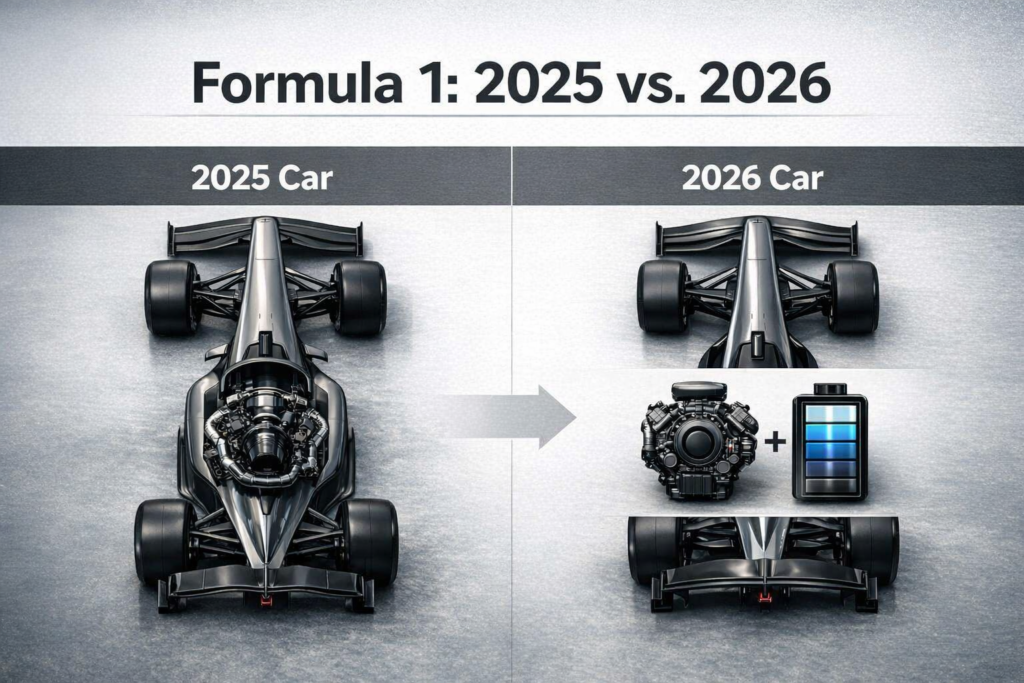
In the high-stakes world of Formula One, a fundamental shift is unfolding. As we approach the Miami Grand Prix, the sport is evolving beyond the roar of the engine and a star driver’s reflexes. It’s now as much about energy management, simulations, and algorithms as it is about the racing line and reaction times.
The Tension: Road vs. Race
Formula 1 is currently walking a tightrope. On one side are the car manufacturers (OEMs) like Audi and Ford. They want “road relevance.” They need the technology in the car to eventually help sell a hybrid SUV in a showroom. This is why the MGU-H—a brilliant but incredibly expensive piece of tech that recovered heat from the exhaust—was banned.
On the other side are the purists. They want the light, loud, fire-breathing dragons of the past. By ditching the MGU-H and focusing on a 50/50 power split between the engine and a massive electric motor (the MGU-K), F1 has traded some “pure” racing soul for a more sustainable, manufacturer-friendly future.
The Regulation Tweak: 3 Key Fixes
Three races in, the data told a story: the cars were fast, but the “energy gaps” were dangerous. Here is how Formula 1, the FIA and OEMs are iterating in real-time:
1. The “Super Clip” (Fast Charging)
- The Problem: To fill their batteries, cars were “clipping”—slowing down significantly at the end of straightaways even while the driver was at full throttle. It looked like the car hit an invisible wall.
- The Fix: The charging limit was boosted from 250kW to 350kW.
- The Result: The battery fills faster, meaning that “slow” period is much shorter. It’s the difference between a slow phone charger and a “Super-Fast” one. You get back to full speed sooner.
2. The Qualifying Squeeze
- The Problem: In qualifying, drivers were spending the whole lap managing their “energy budget” instead of just driving flat-out.
- The Fix: The energy limit was cut from 8 Megajoules to 7 Megajoules.
- The Result: By lowering the ceiling, drivers don’t have to spend as much time “harvesting.” It forces them to be more efficient and allows for more “natural” flat-out laps.
3. The Boost Mode
- The Problem: Massive speed differences between a car using “Boost” and a car “Harvesting” led to scary close calls (like Ollie Bearman’s incident).
- The Fix: “Boost” is now capped at +150kW above what they’re already running. In twisty sections of the track, power is further limited to 250kW.
- The Result: We are smoothing out the spikes. No more “Mario Kart” jumps in speed that catch other drivers off guard.
The Fan Verdict (Reddit Sentiment)
The r/formula1 community is a mix of fascination and frustration.
- The “Formula E+” Tag: Many fans worry the sport is becoming “Formula E on steroids,” where the battery matters more than the driver’s right foot.
- The “Chef” Comment: Fans loved Fernando Alonso’s joke that the cars are so automated and “slow” in corners that you could put a “chef in the cockpit.”
- The Consensus: While purists miss the V10 scream, most agree that the 350kW super-clipping is a “no-brainer” to stop the awkward mid-straight slowing.
What to Watch for in Miami
Keep your eyes on the McLaren MCL40. Team Principal Andrea Stella is bringing a massive update to Florida. They are currently chasing Mercedes (89 points ahead), and this “new car” is their attempt to prove they have mastered the energy-management puzzle better than the rest.
The connection between racing and software development lies in this iterative feedback loop: Hypothesize, Prototype, Build, Race, Measure, Iterate. (Any product managers feeling the vibe?) Miami marks the beginning of a data-driven race series, where engineers and drivers will meticulously gather insights, and teams will strive for the smallest advantage. That’s what makes racing so captivating!
First published on LinkedIn on April 25th, 2026
#F1 #MiamiGP #Engineering #Formula1 #Innovation #HybridFuture